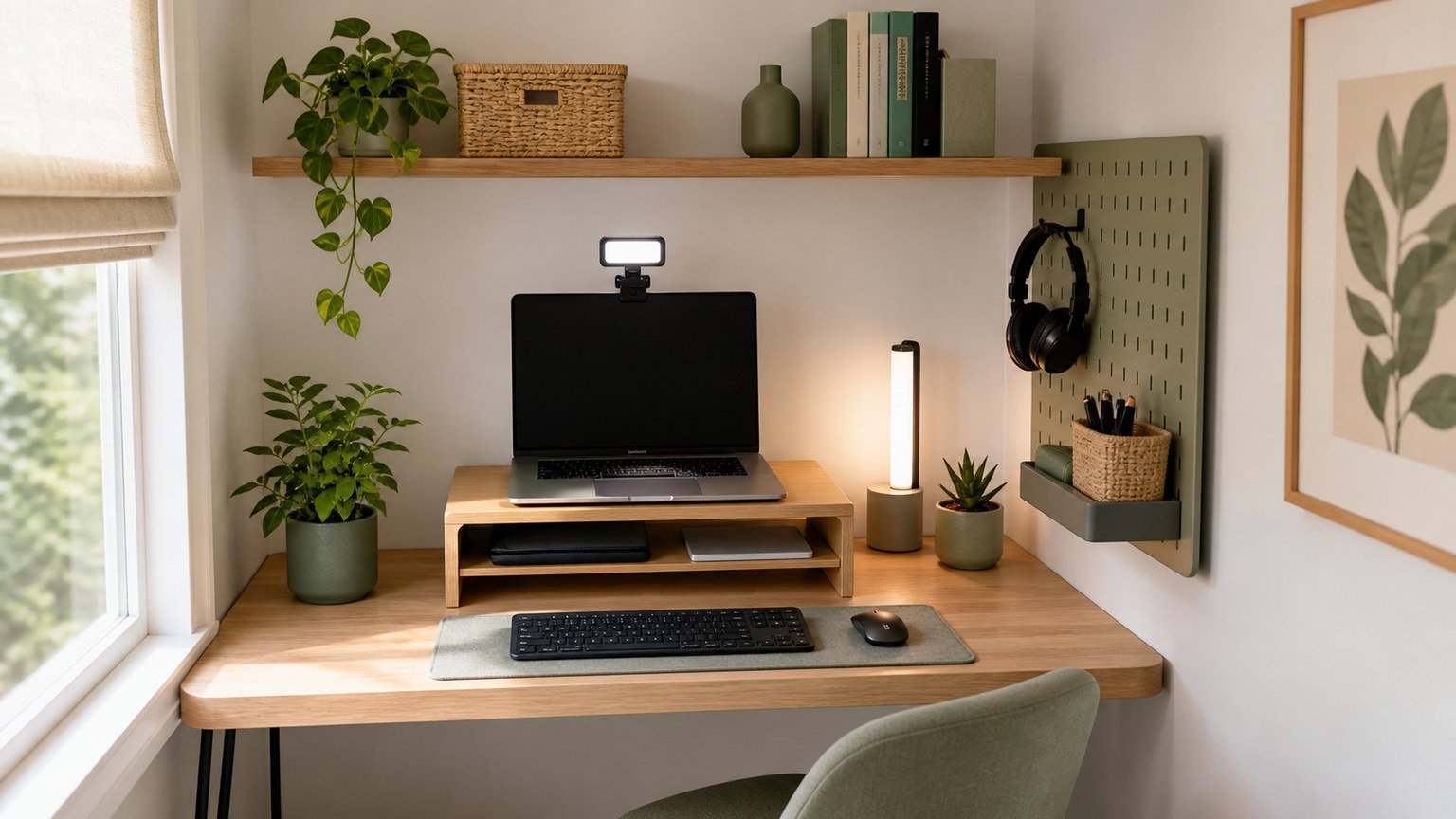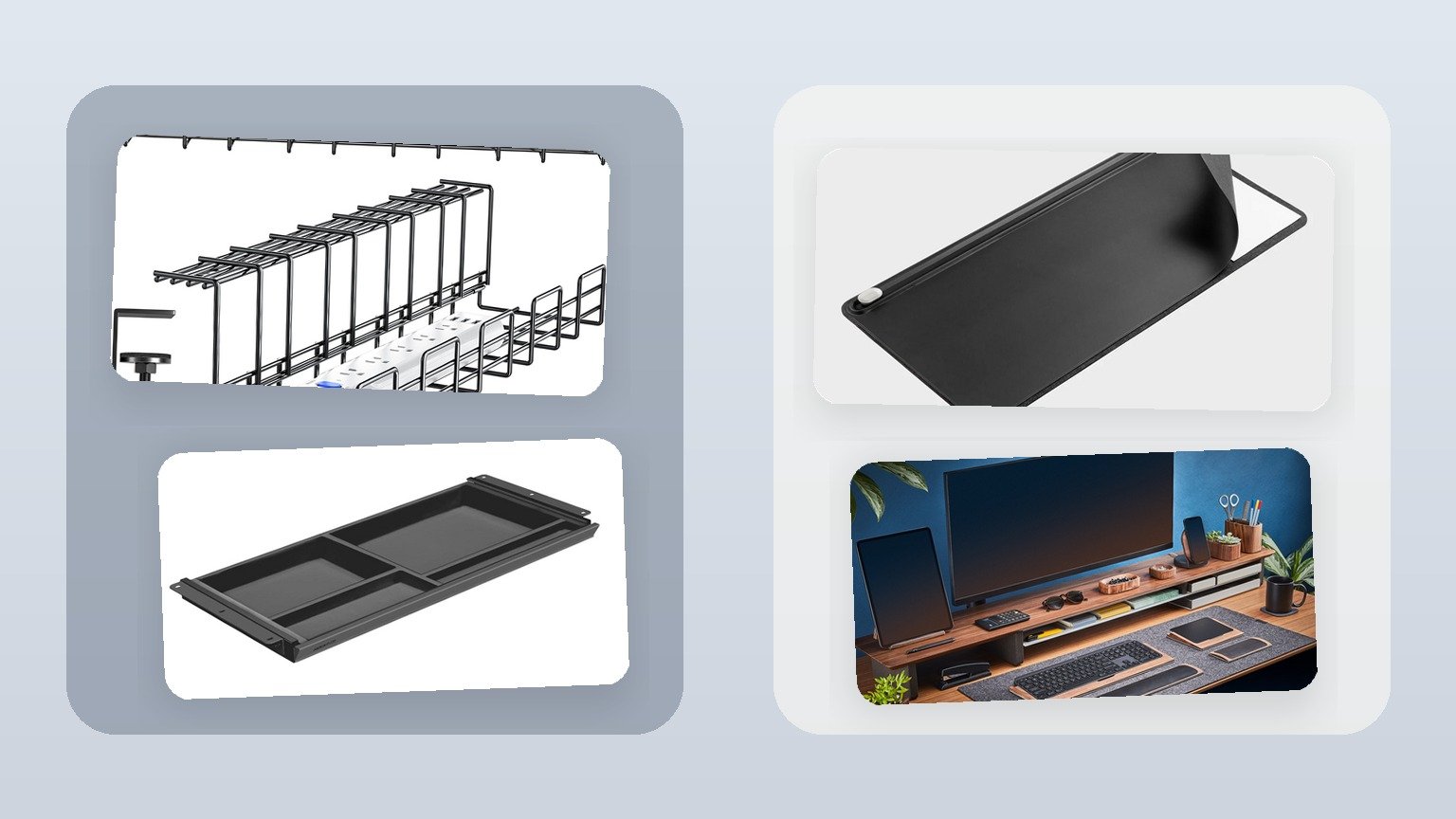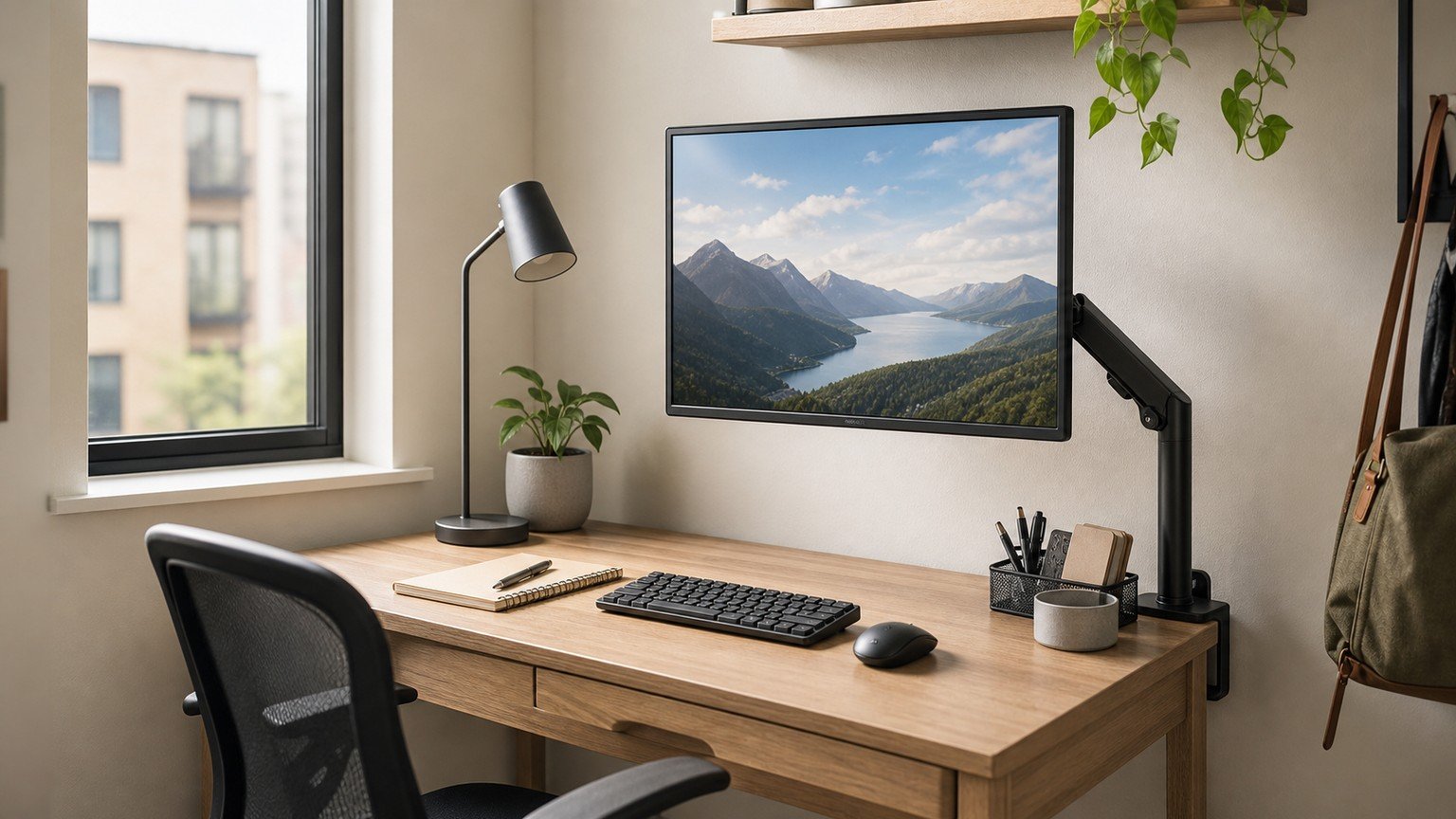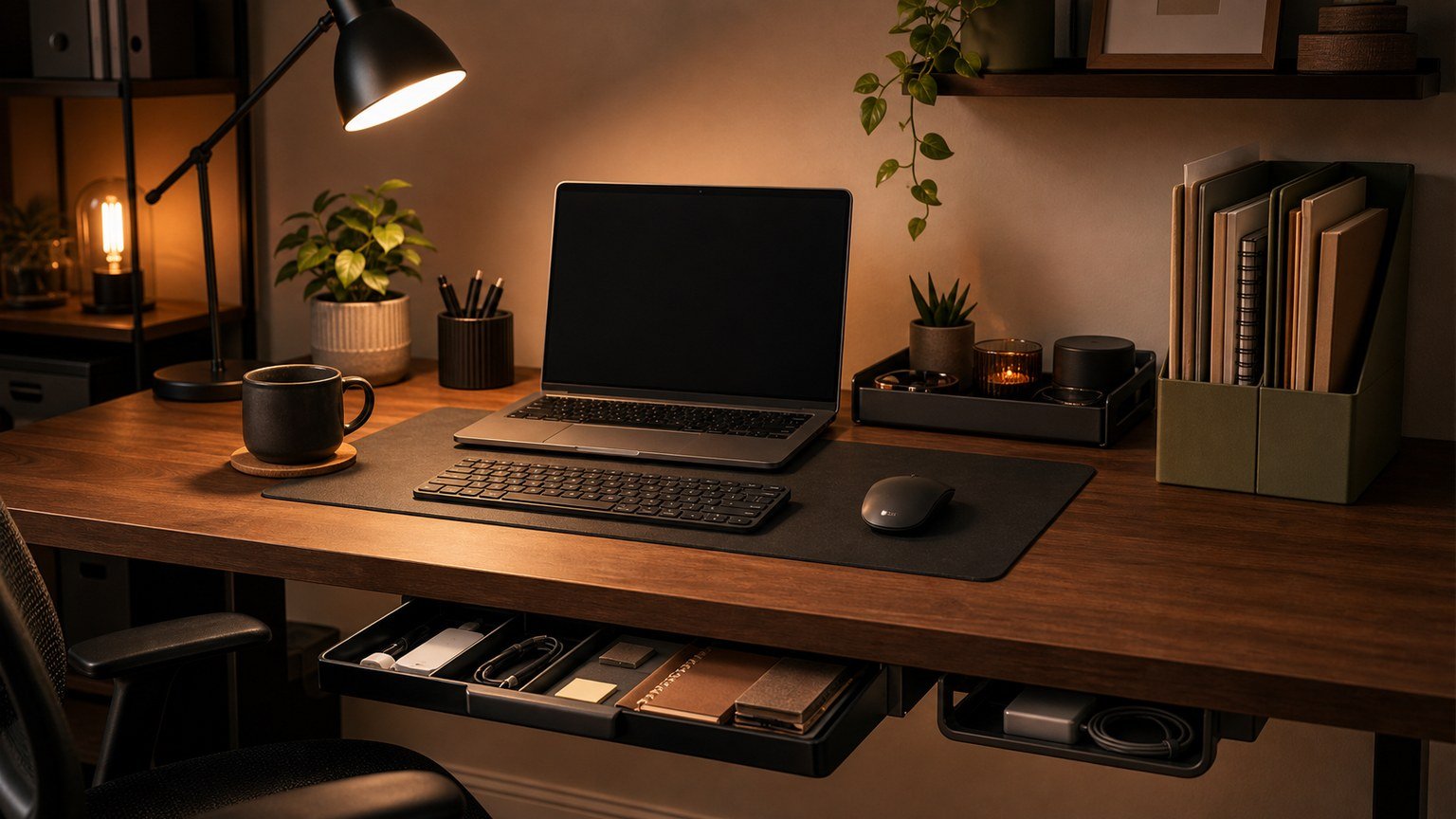
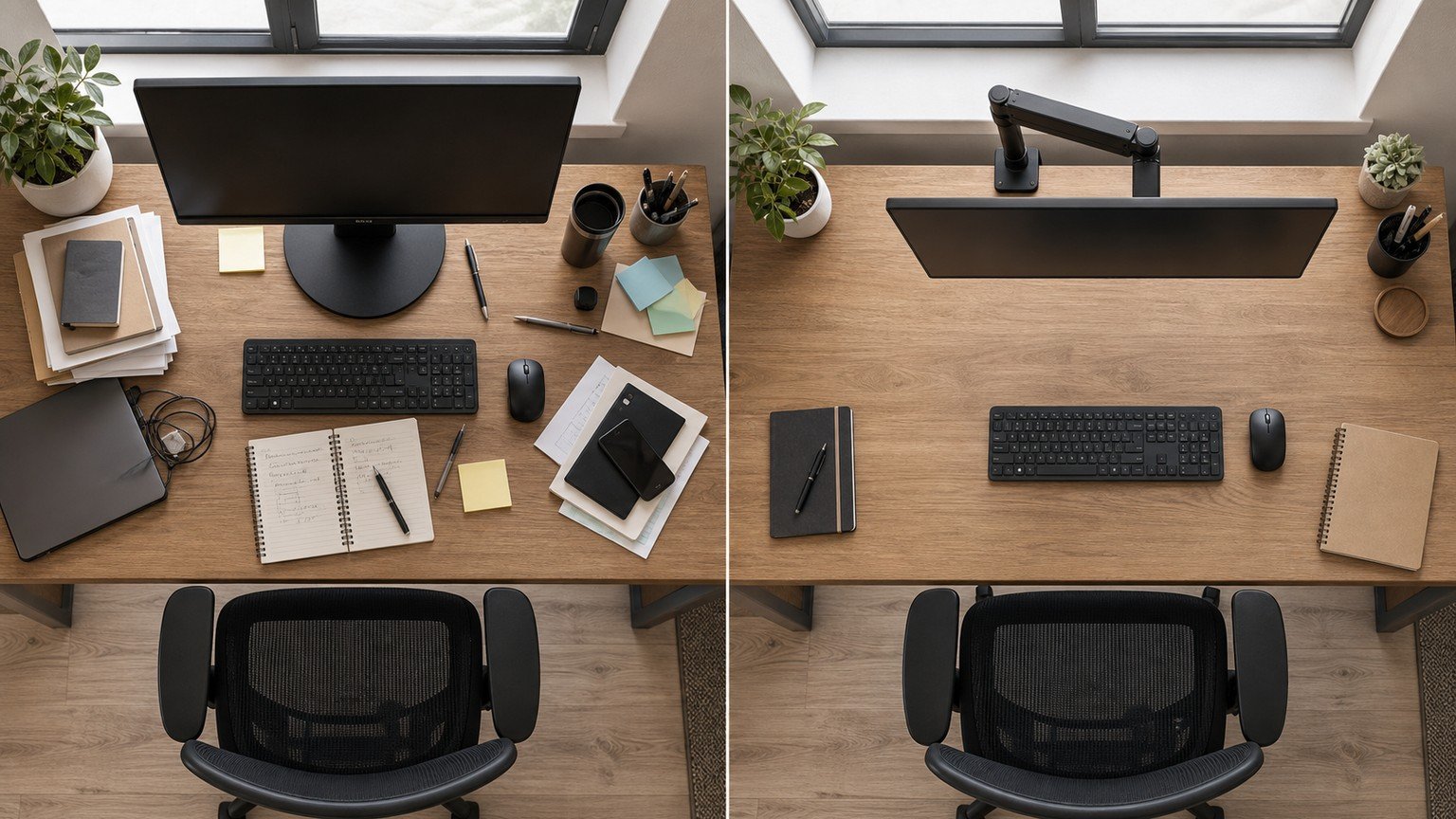
This guide explains monitor arms save desk space in practical workspace terms: what to check first, what usually causes the problem, when a product helps, and when the better answer is changing the setup you already have.
The short answer
Start with the part of the setup that affects your daily routine most. For monitor arms save desk space, the right fix usually comes from adjusting position, reducing clutter, improving reach, or choosing one product that removes a repeat annoyance.


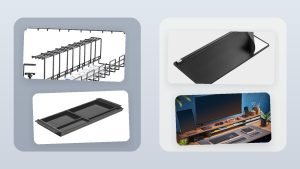
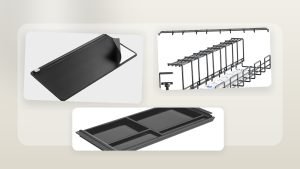

Step-by-step setup
Start with the current pain point
Name the specific annoyance before buying anything: cramped surface, bad posture, messy cables, poor lighting, distracting pets, or tools that are hard to reach.
Measure before changing the setup
Check desk width, depth, monitor height, chair clearance, outlet location, and the path your hands actually use during work.
Change one variable at a time
Move the monitor, lamp, storage, or cable path before adding several new products. One clear change makes it easier to tell what helped.
Choose products only when the gap is clear
A product helps when it solves a specific gap that placement alone cannot fix. It is less useful when it only adds another object to manage.
Common mistakes
Buying before measuring
Small differences in width, height, and clearance can decide whether a product fits or becomes clutter.
Solving the wrong problem
If the real issue is habit or placement, a new product may not fix it. Start with the daily friction, not the most attractive listing.
Adding too many fixes at once
Several changes can make the setup feel busy. A single targeted fix is usually easier to keep.
When products help
Products help with monitor arms save desk space when they improve reach, support, lighting, storage, or separation without making the desk harder to use.
Best overall: Quntis Computer Monitor Lamp, Screen Monitor Light Bar for Eye Caring, USB Reading …
Why it helps: Quntis Computer Monitor Lamp, Screen Monitor Light Bar for Eye Caring, USB Reading … fits the Best overall role because it gives readers comparing monitor arms save desk space a distinct use case to evaluate. Skip it if: buyers who only need a very basic low-friction fix.
Best overall
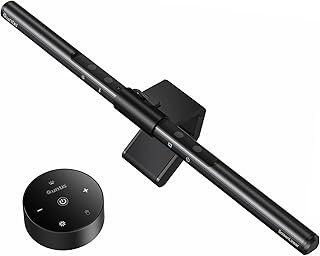
Best overall pick for most buyers
Imported from Amazon search results. Add your editorial summary, buyer-like trends, and drawbacks before using this product in a live article.
$39.95
Best for
Buyers who want a more useful desk upgrade without overcomplicating the setup.
Skip if
Buyers who only need a very basic low-friction fix.
Why it fits
- Quntis Computer Monitor Lamp, Screen Monitor Light Bar for Eye Caring, USB Reading ... is useful as the Best overall because it gives Buyers who want a more useful desk upgrade without overcomplicating the setup a clear buying path instead of another generic led desk light option.
What buyers like
- Owners often mention the practical fit for Buyers who want a more useful desk upgrade without overcomplicating the setup, especially when the product size, controls, storage, or setup style matches the room.
Common complaints
- Common complaints include checking dimensions, setup time, material feel, and whether the Best overall role matches the buyer's actual workspace.
Best Overall: VariDesk Pro Plus 36
Why it helps: VariDesk Pro Plus 36 fits the Best Overall role because it gives readers comparing monitor arms save desk space a distinct use case to evaluate. Skip it if: Budget shoppers or buyers who want electric lift buttons.
Best Overall

Best overall pick for most buyers
A sturdy 36-inch standing desk converter for shoppers who want premium build quality, a two-tier layout, and zero assembly work.
$429 Amazon snapshot on June 10, 2026
Best for
Remote workers who want a premium manual converter with minimal setup friction.
Skip if
Budget shoppers or buyers who want electric lift buttons.
Why it fits
- VariDesk Pro Plus 36 is useful as the Best Overall because it gives Remote workers who want a premium manual converter with minimal setup friction a clear buying path instead of another generic monitor arms save desk space option.
What buyers like
- Owners often mention the practical fit for Remote workers who want a premium manual converter with minimal setup friction, especially when the product size, controls, storage, or setup style matches the room.
Common complaints
- Common complaints include checking dimensions, setup time, material feel, and whether the Best Overall role matches the buyer's actual workspace.
Best Value Dual: HUANUO FlowLift™ Dual Monitor Stand, Fully Adjustable Gaming Monitor Desk Mount for…
Why it helps: HUANUO FlowLift™ Dual Monitor Stand, Fully Adjustable Gaming Monitor Desk Mount for… fits the Best Value Dual role because it gives readers comparing monitor arms save desk space a distinct use case to evaluate. Skip it if: Buyers expecting premium-brand refinement or unusually heavy monitors.
Best Value Dual
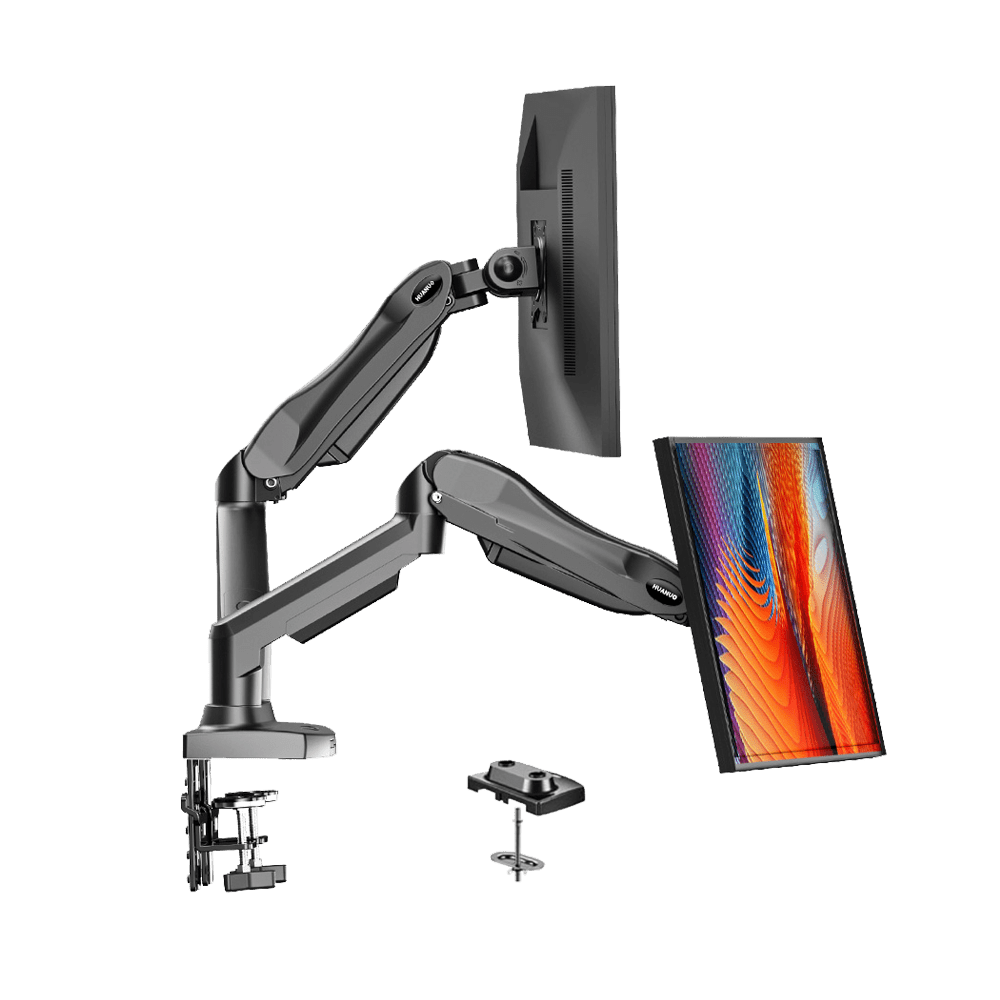
Best Value Dual
A strong value dual-monitor arm with a wide compatibility range and an easy ergonomic case for mainstream two-screen setups.
Value dual-arm price band
Best for
24-inch to 32-inch dual-screen setups and first-time dual-arm buyers.
Skip if
Buyers expecting premium-brand refinement or unusually heavy monitors.
Why it fits
- HUANUO FlowLift™ Dual Monitor Stand, Fully Adjustable Gaming Monitor Desk Mount for... is useful as the Best Value Dual because it gives 24-inch to 32-inch dual-screen setups and first-time dual-arm buyers a clear buying path instead of another generic monitor arms save desk space option.
What buyers like
- Owners often mention the practical fit for 24-inch to 32-inch dual-screen setups and first-time dual-arm buyers, especially when the product size, controls, storage, or setup style matches the room.
Common complaints
- Common complaints include checking dimensions, setup time, material feel, and whether the Best Value Dual role matches the buyer's actual workspace.
How to know the fix is working
The setup is working when you stop noticing the old annoyance. You should reach less, adjust less, clear the desk less often, or feel less strain during the work block.
FAQ
Should I buy something first or rearrange first?
Rearrange first when the problem is placement. Buy only when the missing support, light, storage, or separation cannot be solved with the items you already have.
How much should I change at once?
Change one thing at a time so you can tell what helped. This is especially useful in small rooms where every added item affects the whole desk.
What is the easiest first improvement?
Clear the surface, set the monitor or light position, and move the most-used items into easy reach. Then decide whether a product would make that improvement permanent.
Recommended next reads
If you are still narrowing the setup, compare this guide with related HelloChina home-office articles on desk size, seating, monitor height, lighting, storage, and cable control. The right next read depends on whether the bottleneck is comfort, room layout, or everyday organization around monitor arms save desk space.