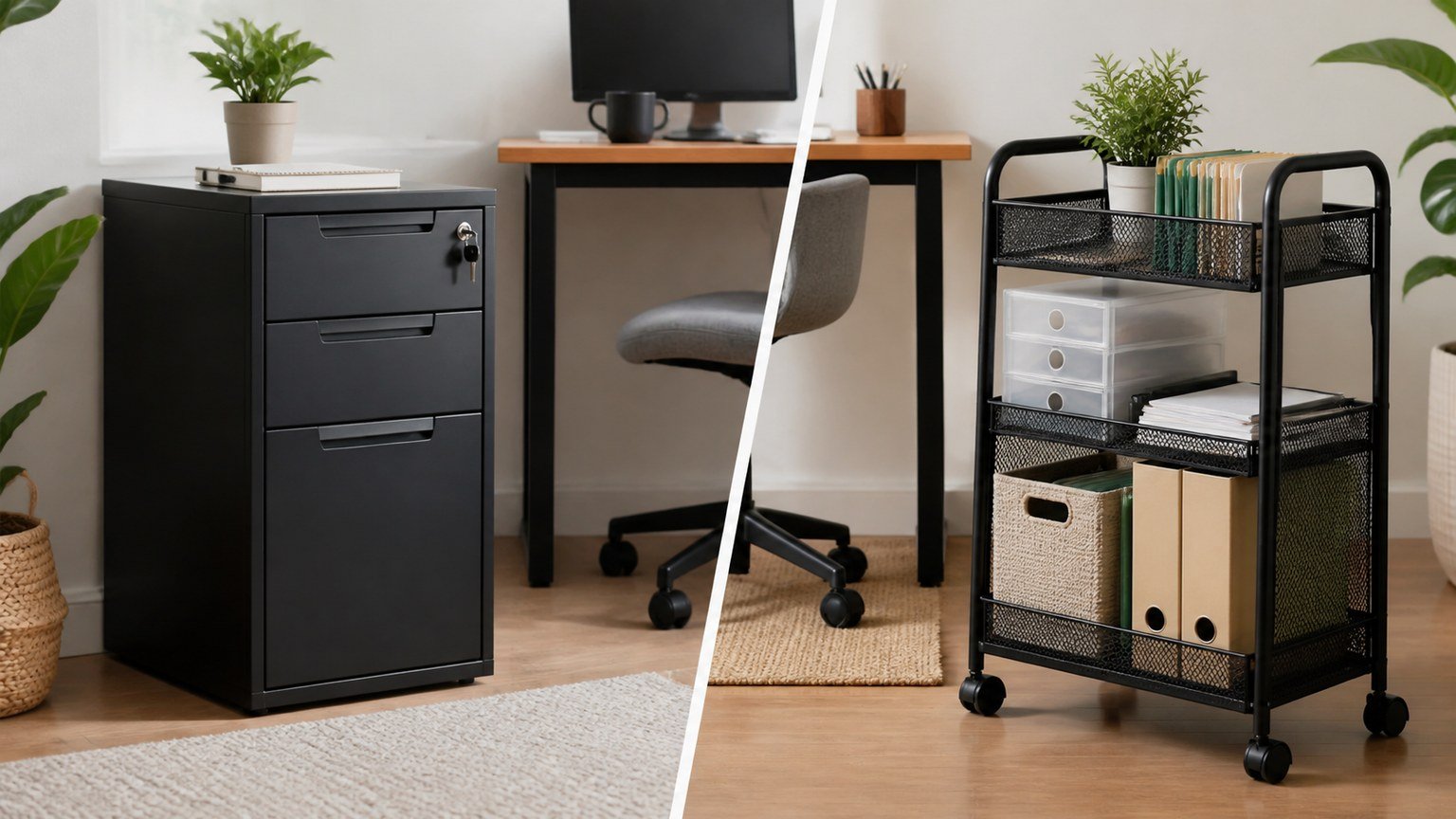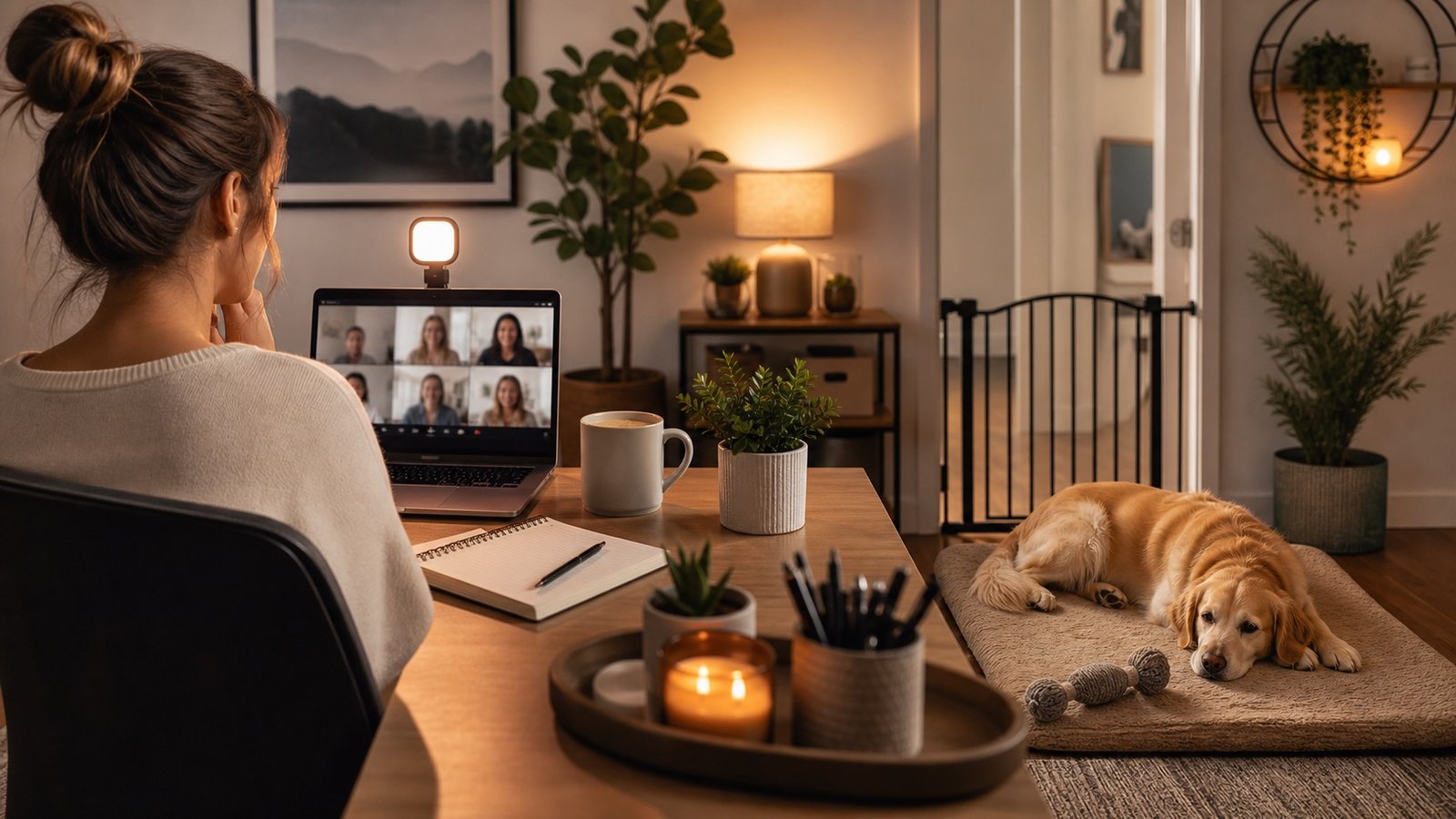
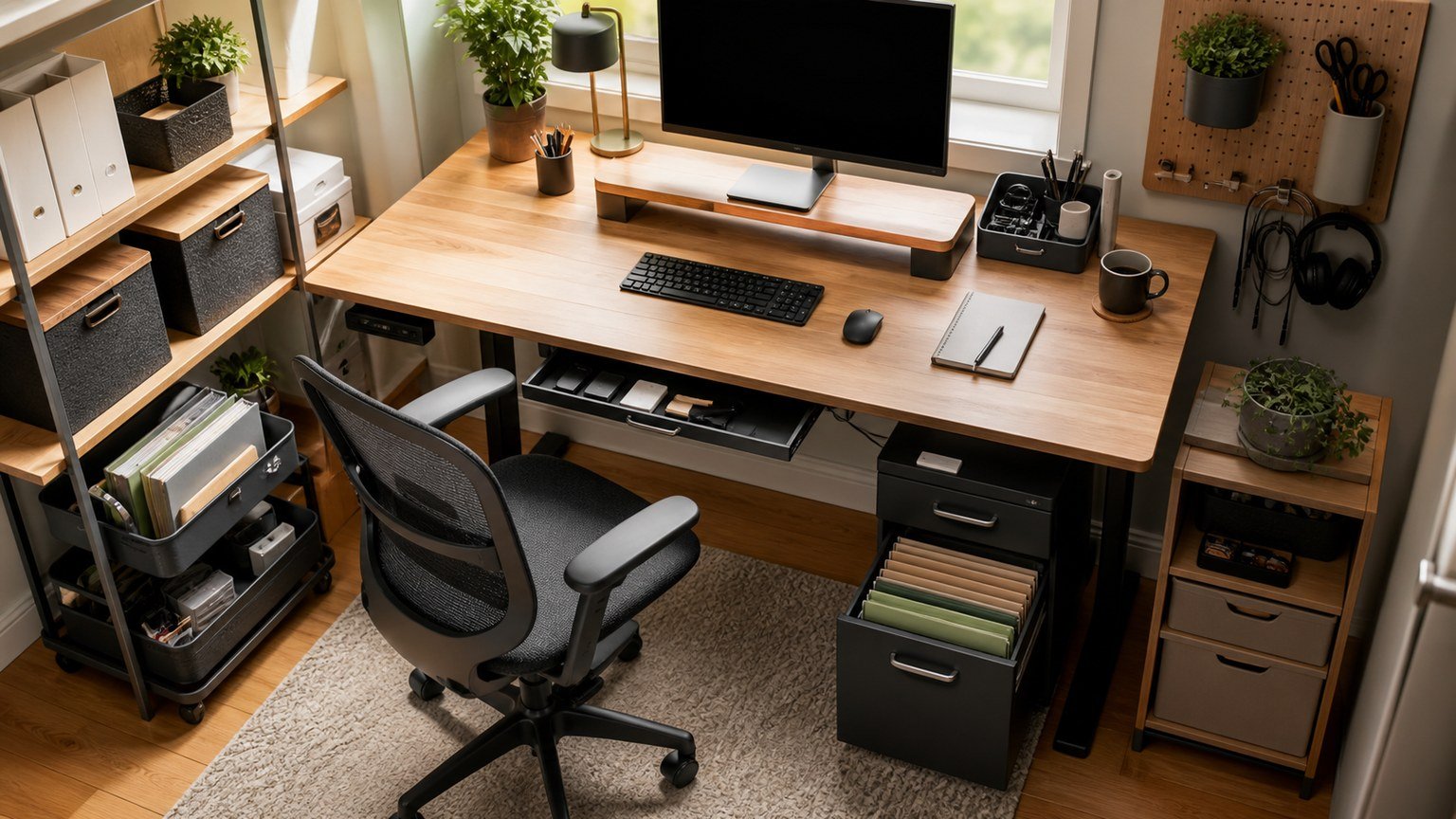
This guide explains organize a small home office in practical workspace terms: what to check first, what usually causes the problem, when a product helps, and when the better answer is changing the setup you already have.
The short answer
Start with the part of the setup that affects your daily routine most. For organize a small home office, the right fix usually comes from adjusting position, reducing clutter, improving reach, or choosing one product that removes a repeat annoyance.


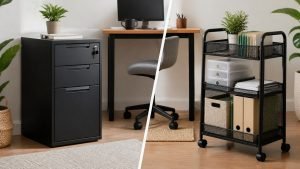
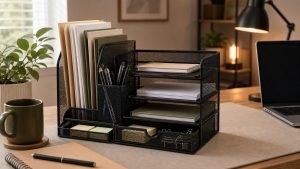
Step-by-step setup
Start with the current pain point
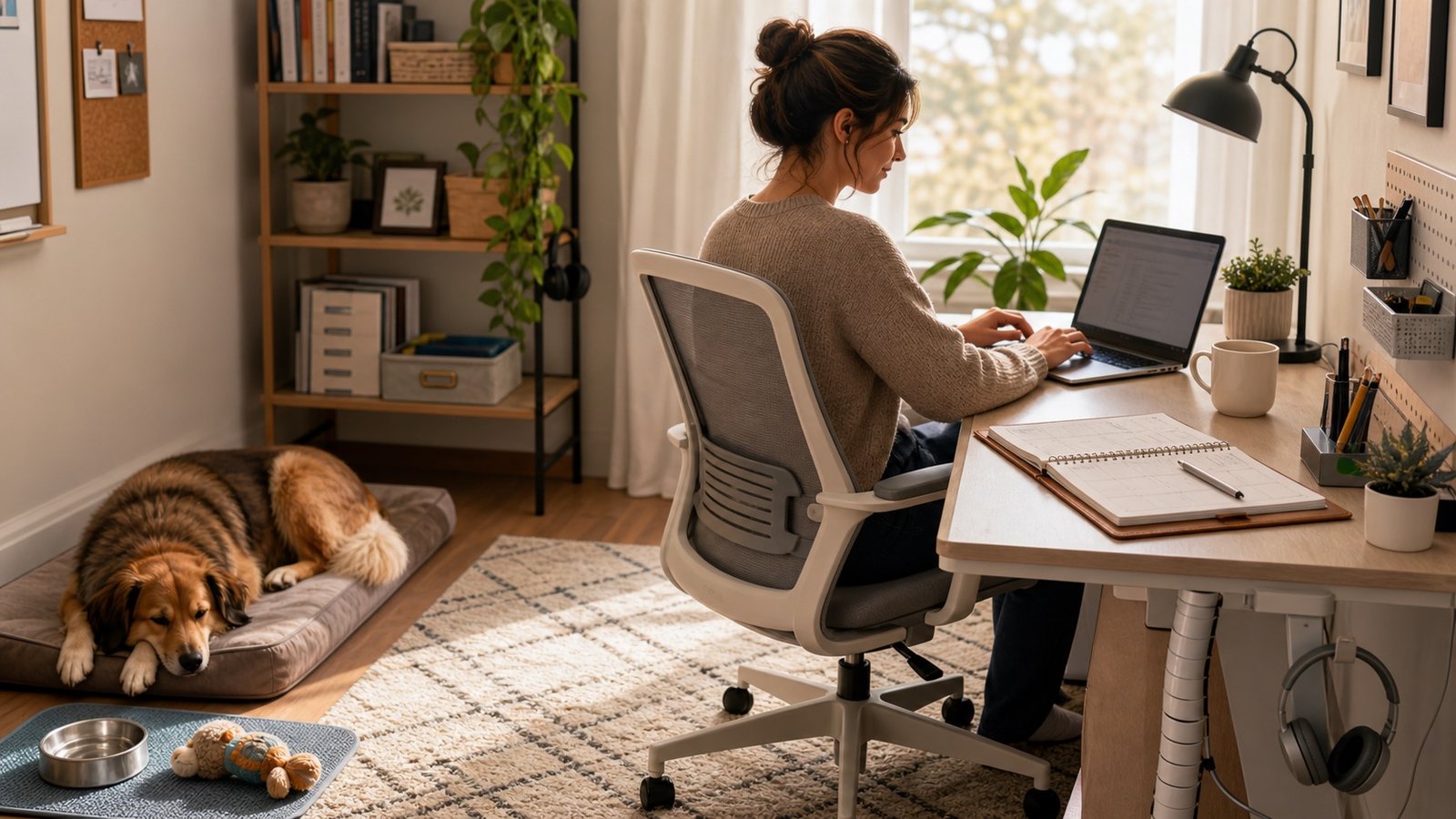
Name the specific annoyance before buying anything: cramped surface, bad posture, messy cables, poor lighting, distracting pets, or tools that are hard to reach.
Measure before changing the setup
Check desk width, depth, monitor height, chair clearance, outlet location, and the path your hands actually use during work.
Change one variable at a time
Move the monitor, lamp, storage, or cable path before adding several new products. One clear change makes it easier to tell what helped.
Choose products only when the gap is clear
A product helps when it solves a specific gap that placement alone cannot fix. It is less useful when it only adds another object to manage.
Common mistakes
Buying before measuring
Small differences in width, height, and clearance can decide whether a product fits or becomes clutter.
Solving the wrong problem
If the real issue is habit or placement, a new product may not fix it. Start with the daily friction, not the most attractive listing.
Adding too many fixes at once
Several changes can make the setup feel busy. A single targeted fix is usually easier to keep.
When products help
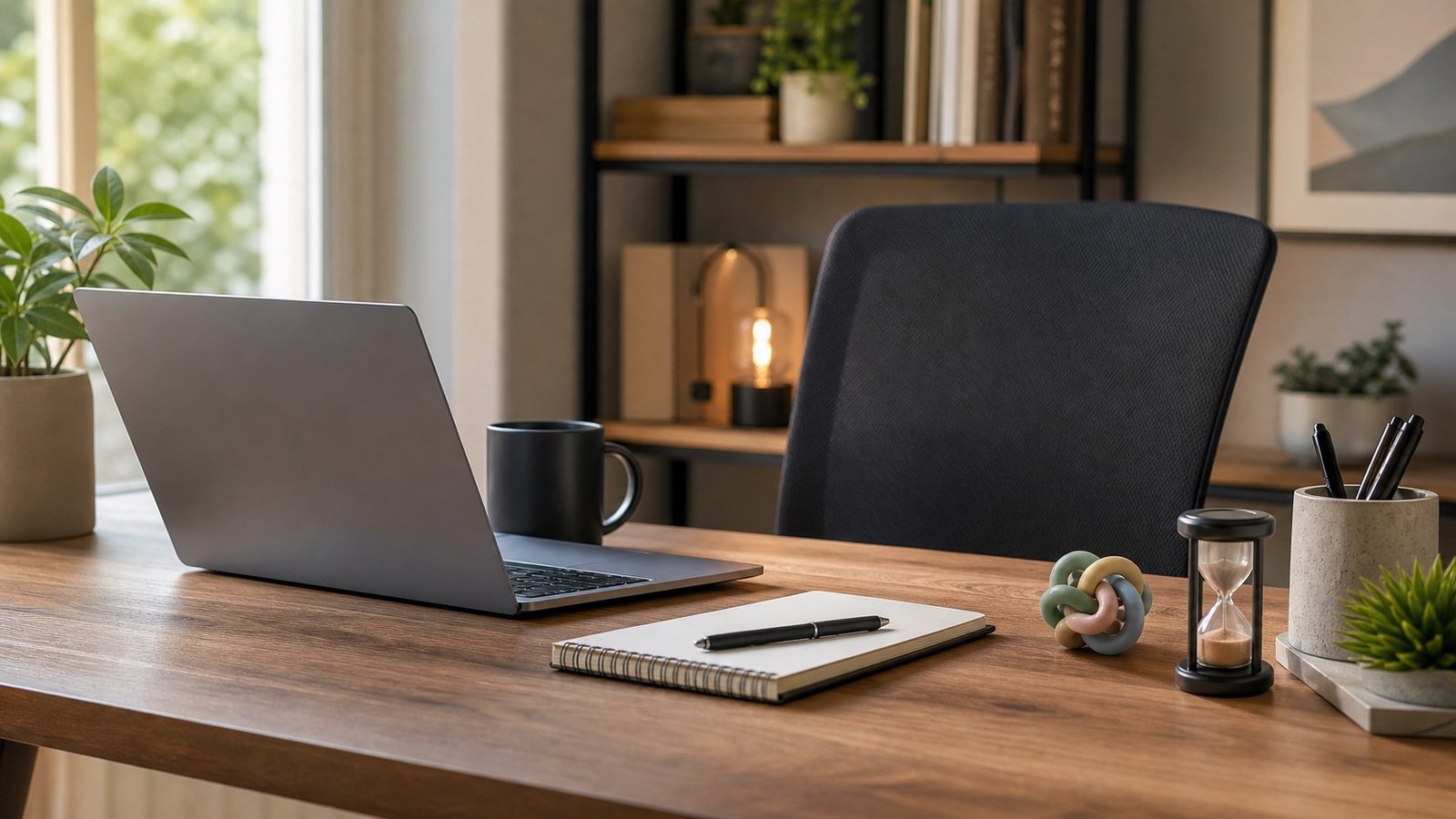
Products help with organize a small home office when they improve reach, support, lighting, storage, or separation without making the desk harder to use.
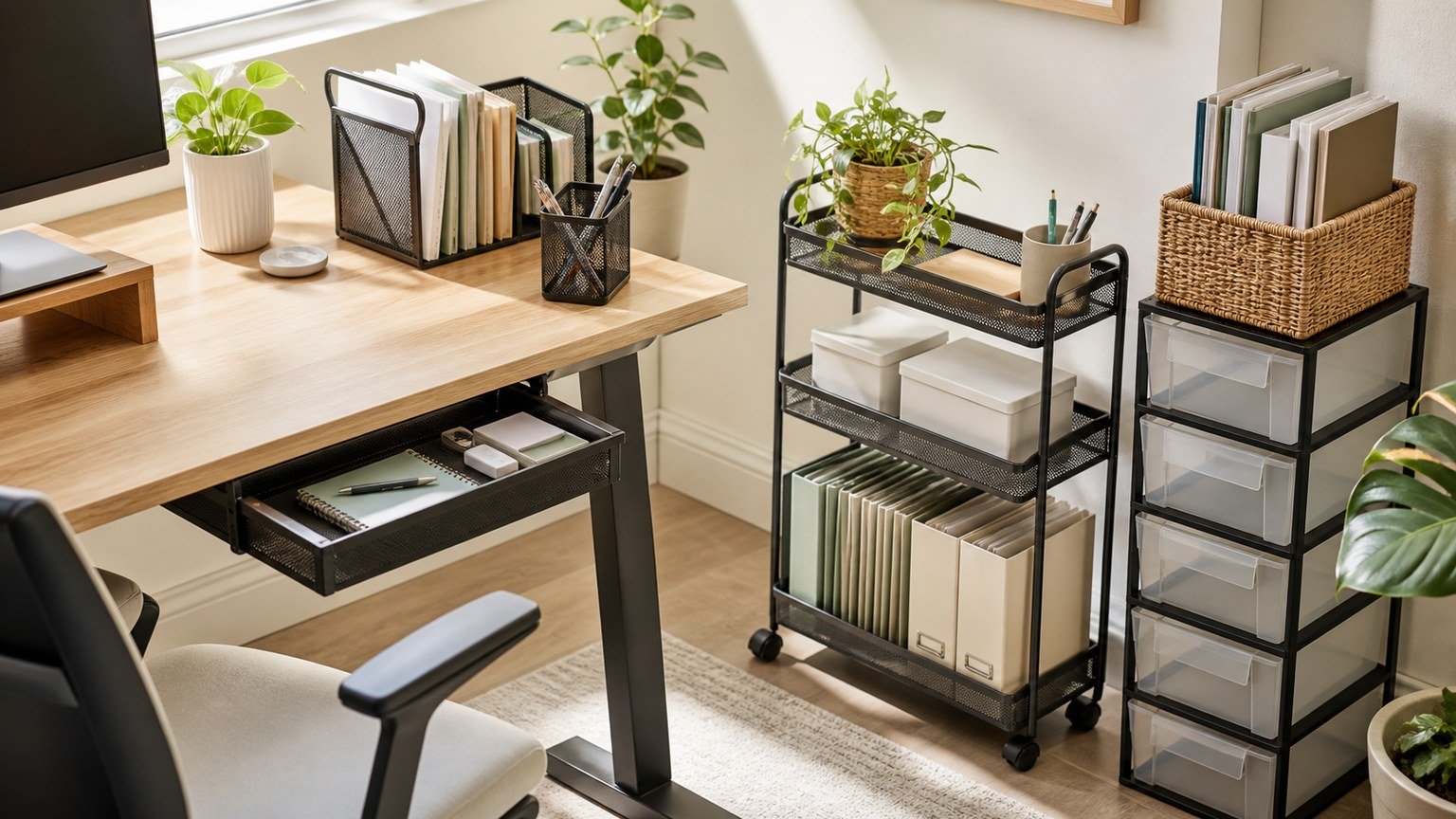
Best Desktop Organizer: Simple Houseware Mesh Desk Organizer with Sliding Drawer
Why it helps: Simple Houseware Mesh Desk Organizer with Sliding Drawer fits the Best Desktop Organizer role because it gives readers comparing organize a small home office a distinct use case to evaluate. Skip it if: Users who want hidden storage or secure document filing.
Best Desktop Organizer
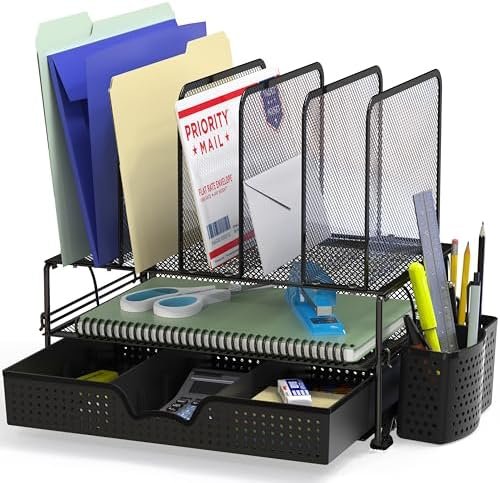
Best for keeping the setup smaller and easier to manage
Simple Houseware Mesh Desk Organizer with Sliding Drawer
A compact desktop command center for papers, notebooks, pens, sticky notes, and small supplies that otherwise spread across the desk.
Amazon price varies by finish
Best for
Small desks that need one visible place for papers, pens, and daily office supplies.
Skip if
Users who want hidden storage or secure document filing.
Why it fits
- Simple Houseware Mesh Desk Organizer with Sliding Drawer is useful as the Best Desktop Organizer because it gives Small desks that need one visible place for papers, pens, and daily office supplies a clear buying path instead of another generic simple houseware mesh desk organizer review option.
What buyers like
- Owners often mention the practical fit for Small desks that need one visible place for papers, pens, and daily office supplies, especially when the product size, controls, storage, or setup style matches the room.
Common complaints
- Common complaints include checking dimensions, setup time, material feel, and whether the Best Desktop Organizer role matches the buyer's actual workspace.
Best Paper Organizer: Samstar Desk File Organizer
Why it helps: Samstar Desk File Organizer fits the Best Paper Organizer role because it gives readers comparing organize a small home office a distinct use case to evaluate. Skip it if: Heavy archive storage or locked document storage.
Best Paper Organizer
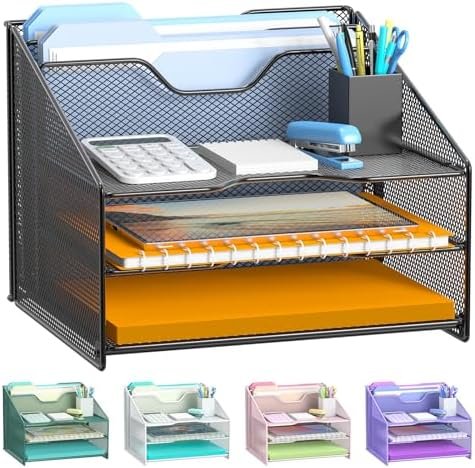
Best Paper Organizer
A vertical paper sorter for notebooks, folders, mail, and active documents that need to stay reachable but not stacked flat.
Amazon price varies by seller
Best for
Active paper, notebooks, folders, and mail that need quick access.
Skip if
Heavy archive storage or locked document storage.
Why it fits
- Samstar Desk File Organizer is useful as the Best Paper Organizer because it gives Active paper, notebooks, folders, and mail that need quick access a clear buying path instead of another generic simple houseware mesh desk organizer review option.
What buyers like
- Owners often mention the practical fit for Active paper, notebooks, folders, and mail that need quick access, especially when the product size, controls, storage, or setup style matches the room.
Common complaints
- Common complaints include checking dimensions, setup time, material feel, and whether the Best Paper Organizer role matches the buyer's actual workspace.
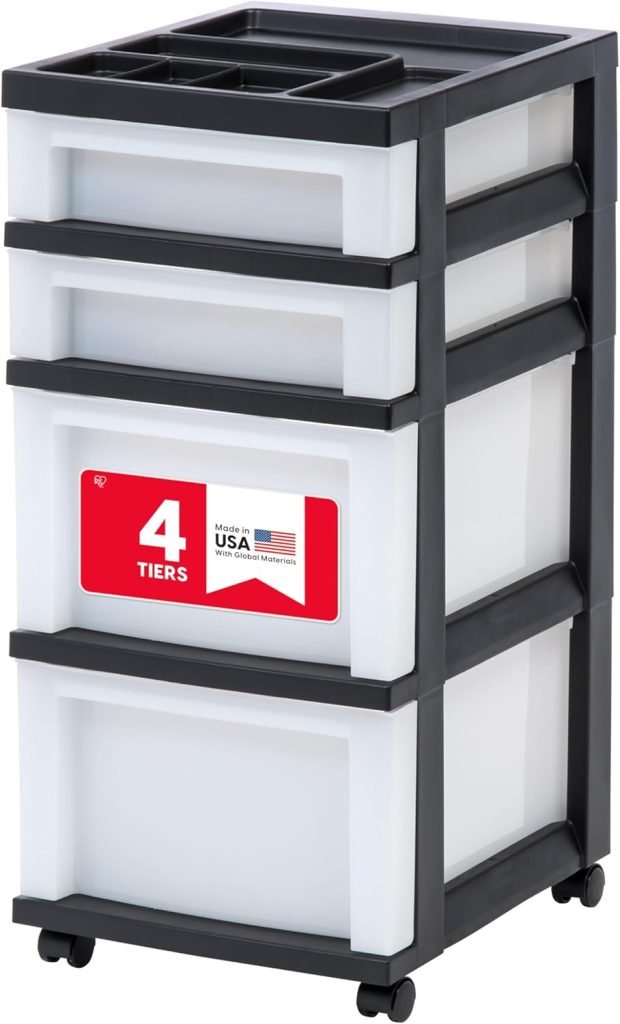
Best Rolling Storage Cart: IRIS USA Rolling Storage Cart
Why it helps: IRIS USA Rolling Storage Cart fits the Best Rolling Storage Cart role because it gives readers comparing organize a small home office a distinct use case to evaluate. Skip it if: Rooms with no floor clearance or users who need locked document storage.
Best Rolling Storage Cart
Best Rolling Storage Cart
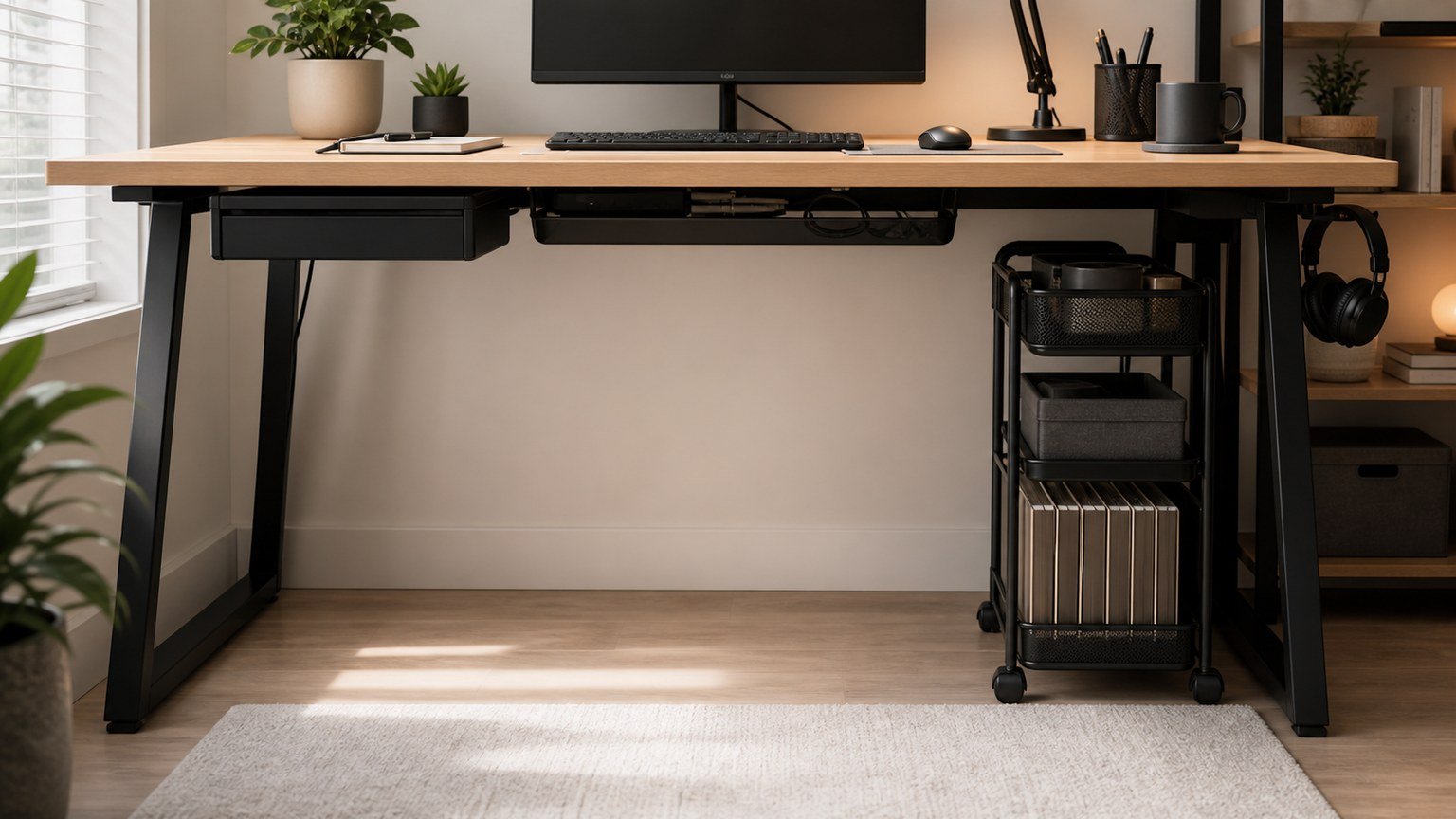
A drawer-style rolling cart for supplies, paper, craft materials, and overflow office items that should not live on the desk.
Amazon price varies by drawer count and color
Best for
Small offices that need movable side storage for supplies and paper overflow.
Skip if
Rooms with no floor clearance or users who need locked document storage.
Why it fits
- IRIS USA Rolling Storage Cart is useful as the Best Rolling Storage Cart because it gives Small offices that need movable side storage for supplies and paper overflow a clear buying path instead of another generic under-desk storage layout for small rooms option.
What buyers like
- Owners often mention the practical fit for Small offices that need movable side storage for supplies and paper overflow, especially when the product size, controls, storage, or setup style matches the room.
Common complaints
- Common complaints include checking dimensions, setup time, material feel, and whether the Best Rolling Storage Cart role matches the buyer's actual workspace.
How to know the fix is working
The setup is working when you stop noticing the old annoyance. You should reach less, adjust less, clear the desk less often, or feel less strain during the work block.
FAQ
Should I buy something first or rearrange first?
Rearrange first when the problem is placement. Buy only when the missing support, light, storage, or separation cannot be solved with the items you already have.
How much should I change at once?
Change one thing at a time so you can tell what helped. This is especially useful in small rooms where every added item affects the whole desk.
What is the easiest first improvement?
Clear the surface, set the monitor or light position, and move the most-used items into easy reach. Then decide whether a product would make that improvement permanent.
Recommended next reads
If you are still narrowing the setup, compare this guide with related HelloChina home-office articles on desk size, seating, monitor height, lighting, storage, and cable control. The right next read depends on whether the bottleneck is comfort, room layout, or everyday organization around organize a small home office.
A simple way to apply this advice is to make one change, use the setup for a full workday, and then decide whether organize a small home office still needs another product or adjustment. That keeps the desk from becoming busier than the problem you were trying to solve.