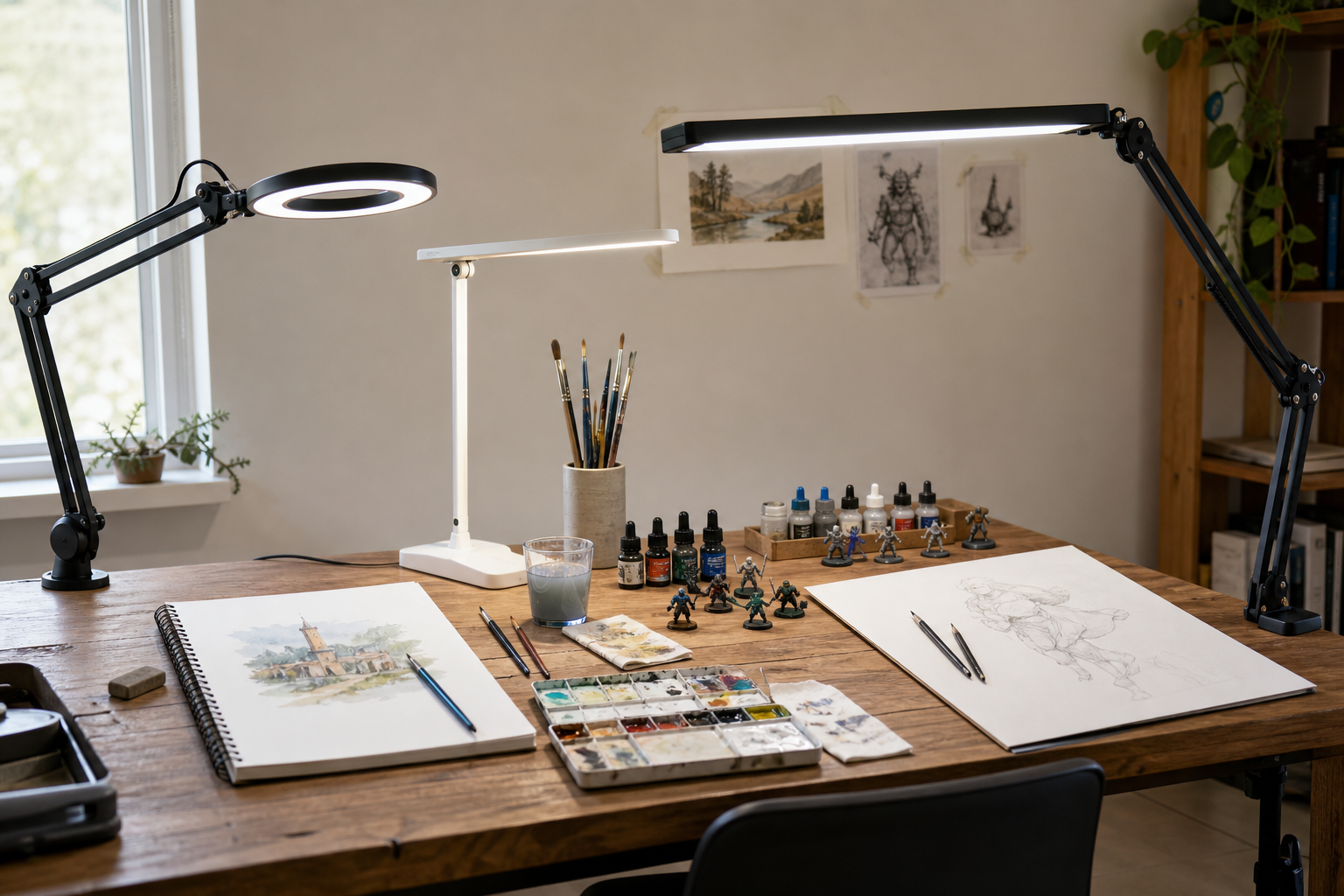
A good artist desk lamp is not the brightest lamp on the shelf. It is the one that keeps color honest, spreads light where your hand actually works, and stays out of the way when a sketchbook, palette, or miniature base already owns most of the desk.
That is why the best choice depends on what you make. Miniature painters need shadow control and true color. Watercolor artists care about seeing washes without tint drift. Drawing and craft work benefit from even coverage. Shared desks and small rooms need a lamp that does the job without stealing half the surface.
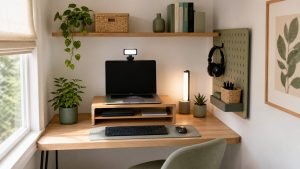
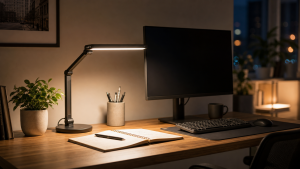
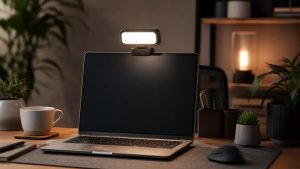
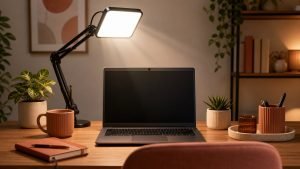
These five picks cover the most common setups, from precision work to large tables.
Quick Picks: Best Desk Lamps for Artists at a Glance
| Pick | Best for | Why it works | Main tradeoff |
|---|---|---|---|
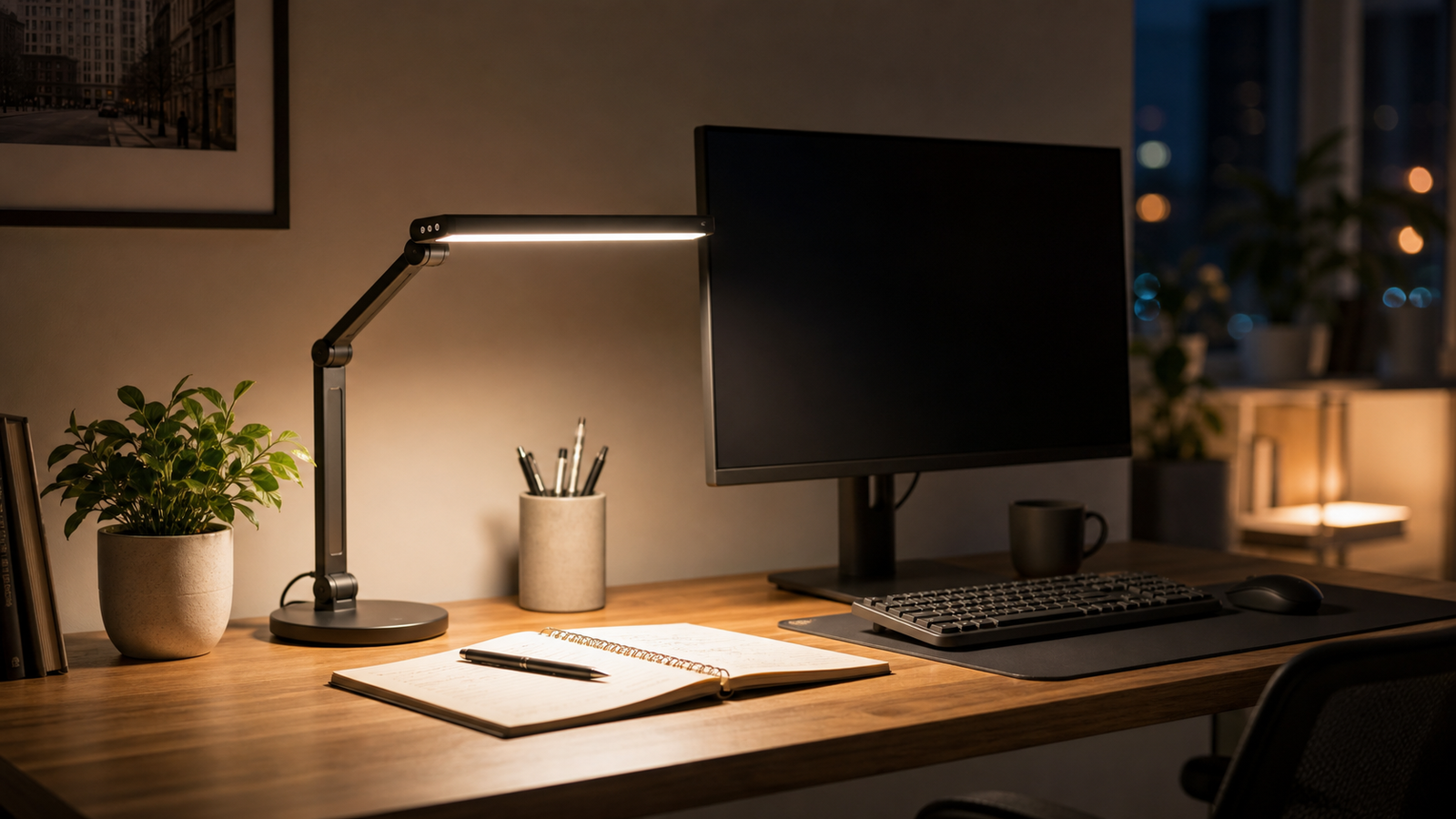
| Best Overall: Redgrass R9 Desk Lamp | Miniatures, precision painting, color-critical work | 98.5+ CRI, 5000K daylight, dual rotating bars, and excellent shadow control | Expensive, and more lamp than a casual hobbyist may need |
| Best for Color Accuracy: Daylight Lumi Task Lamp | Drawing, craft work, and desks that need honest daylight-like color | 95+ CRI, 4000 lux, wide shade, and long reach | Large and more serious than a small desk lamp |
| Best Wide Coverage: BenQ e-Reading Desk Lamp | Wide desks, mixed screen-and-paper work, reading and drafting | 35.4-inch spread, 95 CRI, 23 brightness levels, 13 color temperatures | Curved shape can throw glare if positioned badly |
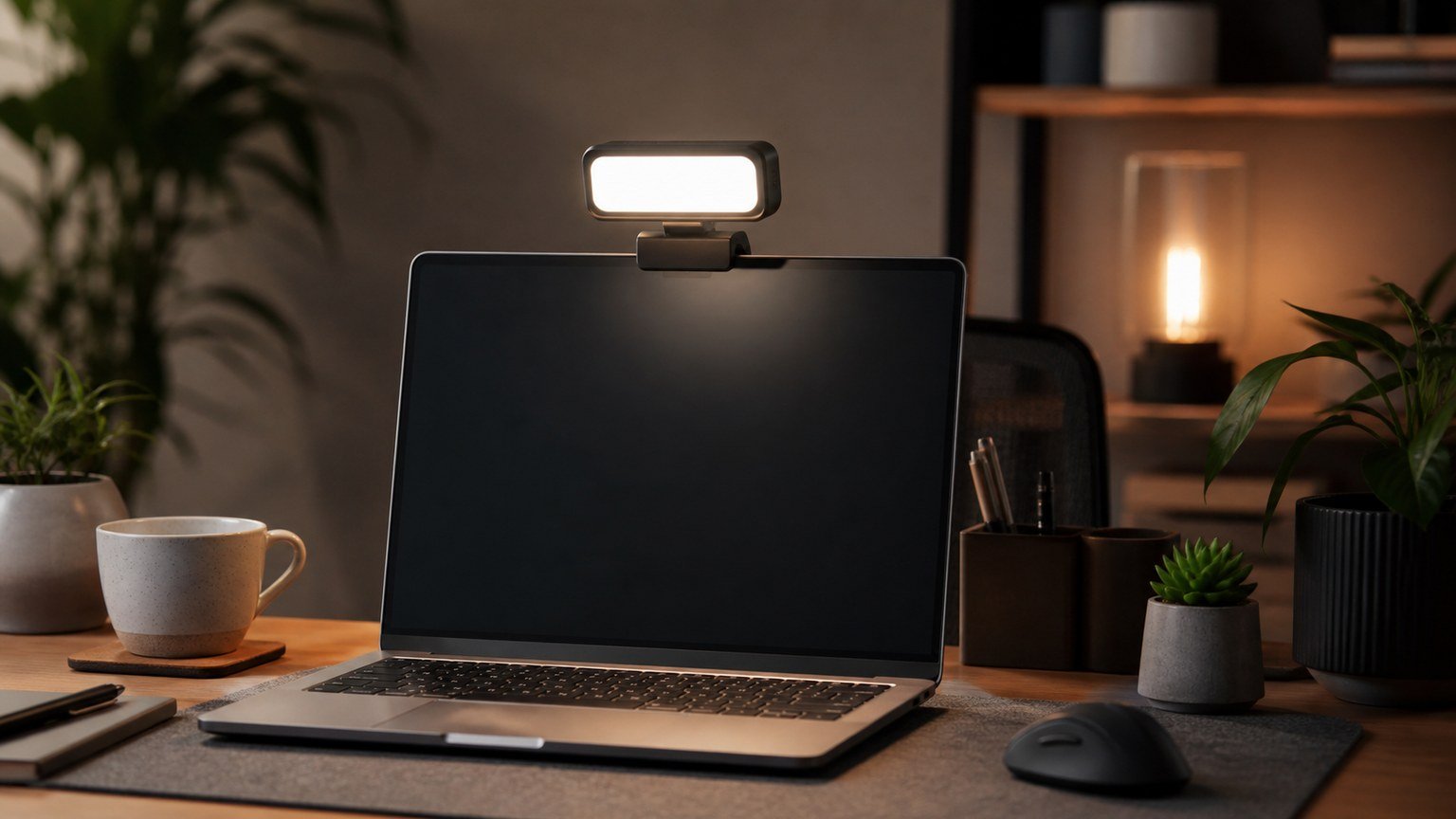
| Best Clamp / Small Desk: Honeywell 05B02 Clip on Artist Desk Lamp | Crowded desks, shared tables, compact art corners | Clamp mount, CRI 97, 1200LM, and a flexible arm | More practical than luxurious |
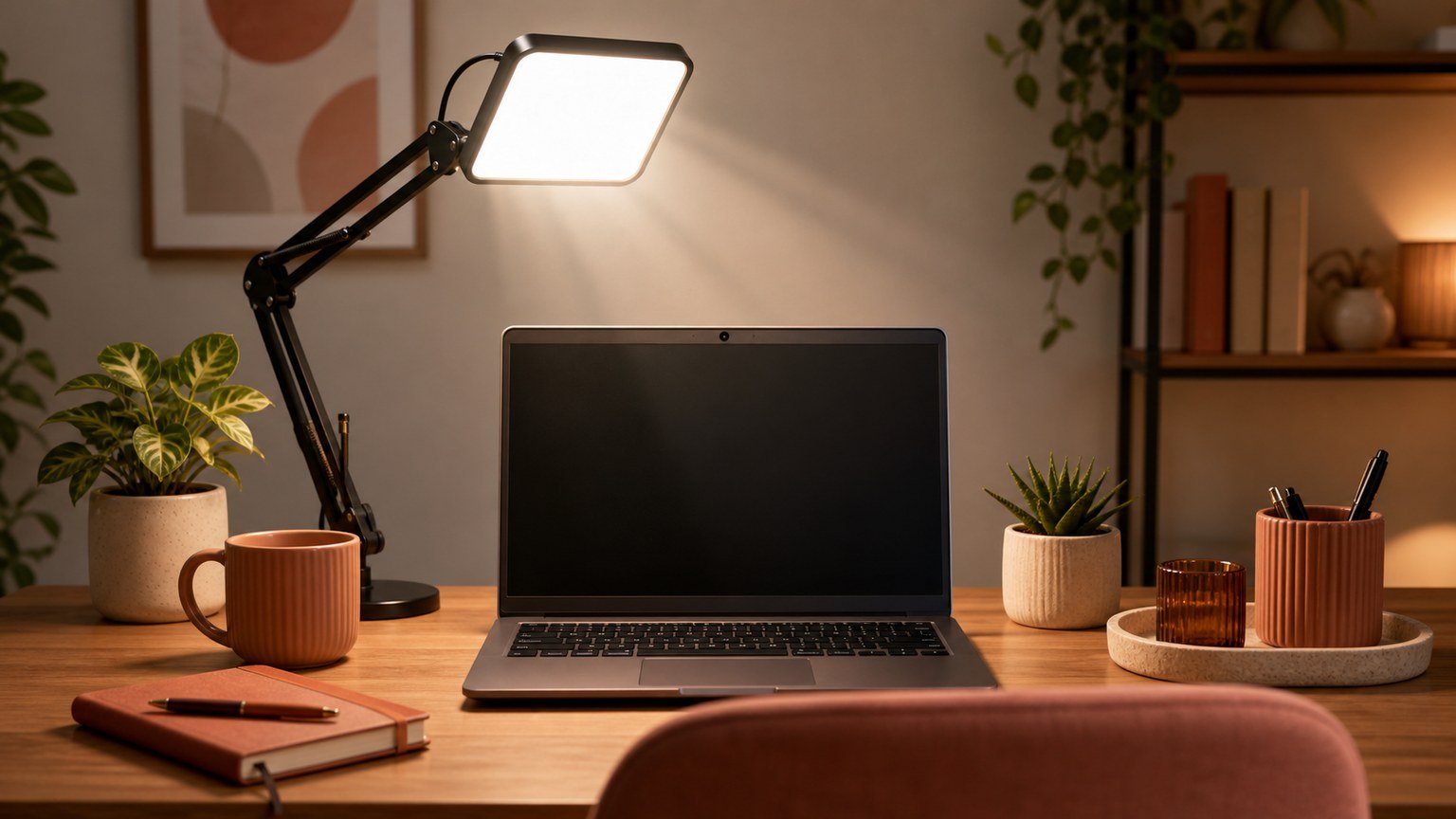
| Best Large Work Surface: Neatfi XL 2200 Lumens Desk Lamp | Large drawing tables, craft benches, broad even lighting | 20-inch wide head, 32-inch arm, and diffuse 2200-lumen output | Less specialized for ultra-fine color work |
If you want one answer, start with Redgrass for precision, Daylight for balanced color, BenQ for broad coverage, Honeywell for cramped desks, and Neatfi when the whole table needs light.
What Matters Most When Choosing an Artist Desk Lamp
For artists, brightness is only the first layer. A lamp can look powerful on paper and still be wrong for the work if it washes out color, throws hard shadows across your hand, or fails to cover the full work area.
CRI matters because it affects how faithfully reds, blues, skin tones, paper, and paint mixtures appear. A lamp with a high CRI usually gives you a more trustworthy read on color. That is especially important when you are matching a reference photo, checking a wash, or deciding whether a shadow is actually neutral or just tinted by the lamp.
Color temperature matters too. Many artists like daylight-style light in the 5000K to 6000K range because it feels clearer and makes color judgment easier. Warmer light is comfortable, but it can make a palette feel softer than it really is. For night work, that warmth may be pleasant. For choosing paint, it can be misleading.
Coverage is the next real filter. A narrow spotlight may be fine for one sketchbook page, but it becomes annoying on a wider desk or when you need to look at both a palette and the artwork at the same time. A lamp with a wider head or a longer arm can reduce the need to keep shifting the light by hand.
Shadows are where many cheap lamps fail. A great art lamp keeps your hand from casting a deep shadow over the exact line you are trying to see. That is why arm shape, head height, and the angle of the beam matter just as much as raw output.
CRI, Color Temperature, and Why Brightness Alone Is Not Enough
If your work depends on color, a high CRI lamp is usually a better choice than a simply bright lamp. Bright light with poor color rendering can still make paint mixes look off. A 5000K to 6000K range is a safe daylight-style zone for most art tasks, while 2700K is better suited to relaxing light than serious color judgment.
Coverage, Shadows, and Desk Layout
A narrow desk can get by with a smaller, more focused lamp. A deep desk, a drawing board, or a shared craft table usually benefits from wider coverage. Clamp lamps are good when surface space is already scarce. Base lamps are easier when you need to move the light around often and do not mind the footprint.
Best Overall: Redgrass R9 Desk Lamp
The Redgrass R9 is the most convincing artist lamp here because it feels built for precision work first and general office lighting second. Redgrass positions it around close, color-critical tasks, and the specs back that up: 5000K daylight, 1800 lumens, 98.5+ CRI, dual rotating bars, and flicker-free, glare-free light.
That combination matters in real use. Miniature painters, detail artists, and hobbyists who care about paint accuracy do not just need more light. They need light that keeps tiny color changes visible and does not bury details under a hard shadow. The dual-bar design helps here because it gives you more ways to shape light around the work instead of forcing one beam to do everything.
Owner comments line up with that idea. The common theme is not just that the R9 is good, but that it feels like a serious step up from cheaper lamps. People also tend to treat it as a purchase they keep, not a gadget they replace a few months later. That is the strongest possible signal for an art tool.
The downside is price. This is not the lamp for someone who is still deciding whether a better light will even change the way they work. It is the lamp for someone who already knows that color accuracy, shadow control, and build quality are worth paying for.
Buy the R9 if your desk is a real creative workstation and you want the best precision lamp in the group. Skip it if you mainly want a simple reading light or a cheap clamp just to get started.
Best for Color Accuracy: Daylight Lumi Task Lamp
The Daylight Lumi is the balanced choice for artists who want color-accurate light without jumping all the way to a premium specialist lamp. The useful part of the spec sheet is easy to understand: 95+ CRI, 4000 lux, a 51 cm lamp head, a 100 cm reach, and a daylight-style 6000K output.
That shape is the point. The Lumi is built more like a workstation lamp than a decorative desk lamp. Its wide head and long reach make it easier to light a drawing surface, craft table, or painting desk evenly without dragging the lamp around every few minutes.
The long-term feedback is solid. In hobby discussions, owners describe the Lumi as a lamp that gives even light with no hard shadows and keeps going for years. That is exactly the kind of praise an artist lamp should earn. You do not want a light that feels good for one week and annoying for the next six months.
The tradeoff is size. The Lumi is not trying to disappear. It takes up room, and it looks like a serious tool. That is good if you work at the lamp every day. It is less useful if your desk is tiny or you only need an occasional bedside light.
Choose the Lumi when you want strong color rendering, a wide working beam, and a lamp that feels made for actual creative work instead of generic desk use.
Best Wide Coverage: BenQ e-Reading Desk Lamp
The BenQ e-Reading lamp is the best choice when your work surface is wider than a normal sketchbook zone. BenQ’s own positioning is clear: the curved head spreads light across a broad desk, the lamp offers 35.4 inches of coverage, and it includes 23 brightness levels, 13 color temperatures, and Ra 95 color rendering.
That makes it useful for people who bounce between paper and screen. If you are checking a reference image on one side of the desk and drawing on the other, or if you are keeping a tablet, notebook, and tools on the same surface, the wider beam reduces the need to keep moving the lamp.
Reddit owners tend to like it on workbenches, especially when they want a broad, clean lighting field. The caveat is worth keeping in mind: some hobbyists find the curved head can throw glare if aimed badly, and others feel it is darker than expected at full brightness. That does not make it a bad lamp. It just means placement matters more here than with some simpler task lights.
If you want a broad, smart lamp for a bigger desk or a mixed paper-and-screen setup, the BenQ is one of the most practical options in the group.
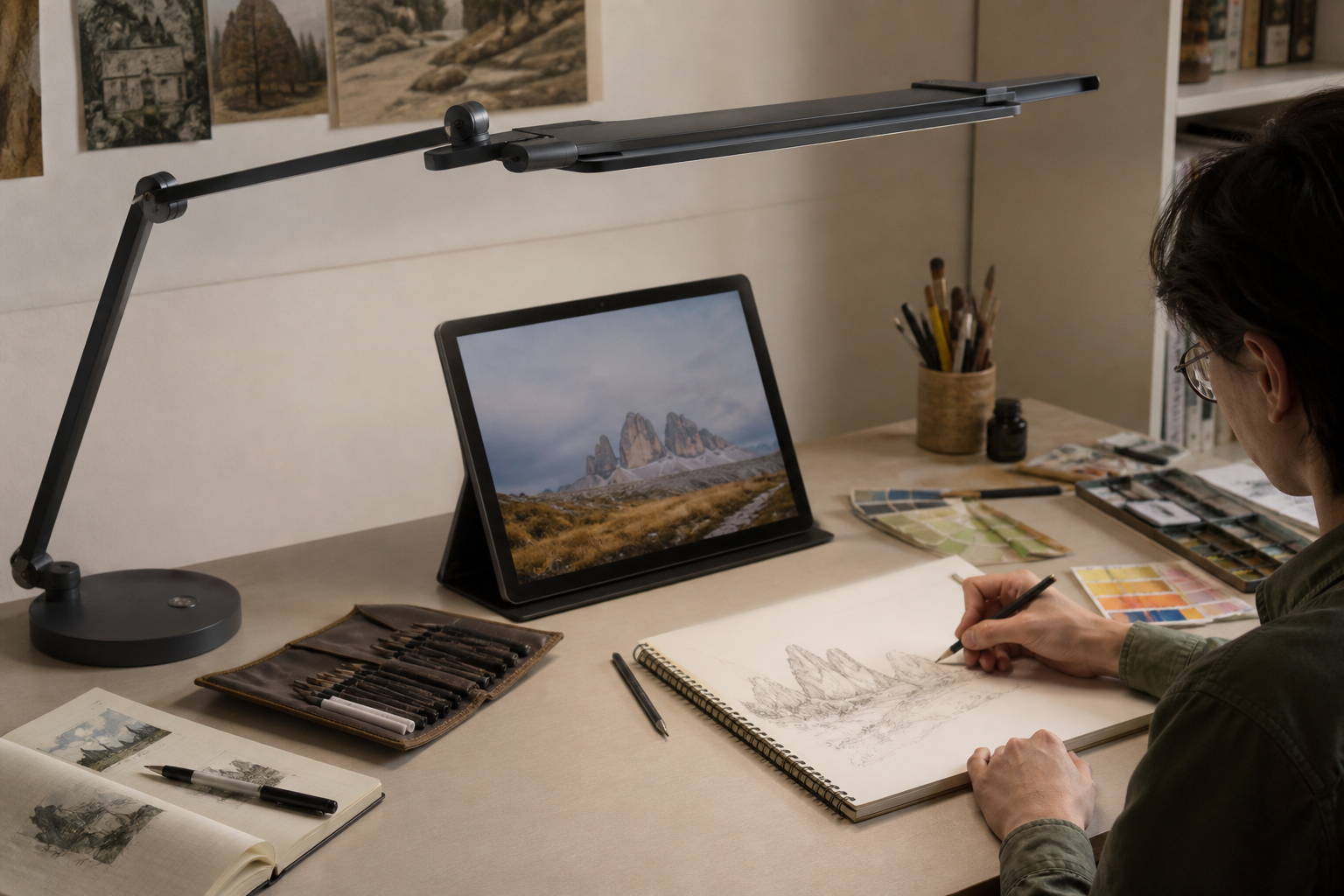
Best Clamp / Small Desk: Honeywell 05B02 Clip on Artist Desk Lamp
Sometimes the right answer is not a better lamp, but a lamp that stops taking up desk space. That is where the Honeywell 05B02 makes sense. It clamps to the edge of the desk, carries the light off the surface, and gives you back room for brushes, sketchpads, rulers, or a palette.
On paper, it is a strong art-lighting option. Honeywell lists 1200LM, CRI 97, four color modes, stepless dimming, and a flexible arm. That is a sensible mix for small creative setups because it gives you light control without forcing a big base onto an already crowded table.
This is also the most natural pick for a shared desk or a standing desk where the surface changes all the time. A clamp light is easier to commit to when you do not want to keep sliding a base lamp around every time your layout changes.
The tradeoff is simple. Clamp lamps are often chosen for function, not glamour. If you want a lamp that feels premium and sculptural, this is not that. If you want one less object sitting on your desk, it is a smart choice.
Best Large Work Surface: Neatfi XL 2200 Lumens Desk Lamp
The Neatfi XL is the broad coverage pick for people who work on a bigger surface and want even lighting more than a specialty art statement. Its Amazon page lists 2200 lumens, a 20-inch wide head, and a 32-inch triple-joint arm. That is the sort of shape you buy when the whole table needs to be usable, not just the center spot under a small lamp.
Artists and miniature painters often like the Neatfi style because it gives diffuse, forgiving light. In practice, that means you can see the work without fighting a bright center hot spot or deep falloff at the edges. That is helpful on a craft table, a drawing board, or a workbench where tools and materials are spread out.
The common praise in hobby discussions is not that it is the most elegant lamp. It is that it is easy to use, gives proper color temperature, and simply does the job on a wider desk. That is exactly the right reason to buy it.
If your table is large and your main complaint is uneven lighting across the workspace, the Neatfi is a practical fit. If you need the most color-critical lamp in the group, Redgrass or Daylight is the better place to start.
Real-World Buying Lessons From Artists
The best art lamps win on a few repeating details rather than a single flashy spec. The first is even light. Artists talk about it constantly because a lamp that leaves a hard shadow across your hand or your reference photo gets annoying fast. Even coverage is not a luxury. It is what makes the desk usable.
The second is color trust. A lamp can be bright and still make your work harder if reds look dull, paper looks yellow, or a neutral gray turns blue. That is why high-CRI lamps keep coming up in hobby circles. Once people get used to seeing their work under honest light, they stop wanting to go back.
The third is fit. A big base can be fine on a roomy table, but it becomes a problem on a crowded art desk. A clamp lamp can be the right answer even if it looks less impressive, because it gives your hands and materials more room to work.
Long-term comments also matter. The lamps people keep using are usually the ones that disappear into the routine. They do not require a manual every time you turn them on. They do not wobble when you reach across the page. They do not make you think about the lamp after the first minute.
How to Choose by Medium and Workspace
The right lamp depends on what you make most often.
For Painting and Miniatures
Choose high CRI first, then think about shadow control. Miniature painters need to see subtle transitions, not just bright surfaces. Redgrass and Daylight are the strongest starts here because they behave like precision tools, not generic lamps.
For Drawing, Sketching, and Watercolor
You want even light across the page and a color temperature that does not distort the paper or pigment. The Lumi and BenQ both work well here, but for different reasons. Lumi feels more like a classic art workstation lamp, while BenQ is better when the desk is wider or also has a screen on it.
For Small Desks and Shared Tables
Clamp lamps usually win because they free the work surface. The Honeywell is the clearest fit if your desk is already crowded or if you need the light to stay out of the way when the setup changes during the day.
Final Verdict: Which Artist Desk Lamp Should You Buy?
If you want the most serious precision lamp, buy the Redgrass R9 Desk Lamp. It is the best choice for color-critical art, miniature painting, and anyone who wants the closest thing to a premium workstation light.
If you want the most balanced creative desk lamp, buy the Daylight Lumi Task Lamp. It is the easiest all-around recommendation for drawing, craft work, and desks that need honest daylight-like color.
If your desk is wide or shared with a screen, the BenQ e-Reading Desk Lamp is the smarter coverage pick. If the desk is cramped, the Honeywell 05B02 Clip on Artist Desk Lamp saves space. If the whole table needs light, the Neatfi XL 2200 Lumens Desk Lamp is the practical large-surface option.
FAQ
Is 95 CRI good enough for artists?
Yes, for most people it is. A 95 CRI lamp is already strong enough for drawing, painting, and craft work. If your work is extremely color sensitive, a 98+ CRI lamp can still be worth the jump.
Should artists use 5000K or 6000K?
Both can work. 5000K feels closer to true daylight, while 6000K can look a little cooler and brighter. For most art desks, the right answer is whichever gives you stable, comfortable, color-true light without glare.
Do I need a clamp lamp or a base lamp?
Use a clamp lamp when desk space is tight or when you want the light off the work surface. Use a base lamp when you want to move the lamp around more freely and do not mind the footprint.
How many lumens do artists need?
There is no single perfect number. The useful question is whether the lamp gives you even light across the work area without forcing you to squint. A well-designed 1200-lumen lamp can be more useful than a poorly shaped brighter lamp.
Can one desk lamp be enough for painting?
Yes, for many desks it can. One good lamp is enough if it gives you true color, soft shadows, and wide enough coverage. Bigger tables or shared setups may feel better with a second light or a wider lamp head.